Indoor Air Quality: What Your HVAC Is (and Isn't) Doing for You
Your HVAC system does one thing well: it moves air through your home to regulate temperature. Standard HVAC filters, the MERV 8–11 kind in most Austin homes, capture large particles like pollen and pet dander. What they do not capture are fine particulates, volatile organic compounds, or gases. And because HVAC systems recirculate air rather than replace it, anything disturbed during a remodel gets distributed throughout the home if the work zone isn't properly isolated first.
This is not a knock on HVAC. It was designed for temperature management, not air purification. The problem is that most homeowners assume those two things are the same system, and that assumption leads to genuinely poor air quality decisions during and after a remodel. This article covers what actually drives indoor air quality, why a remodel is the moment it matters most, and what Austin homeowners specifically are dealing with that most markets aren't.
What your HVAC actually does, and where it stops
A standard residential HVAC system filters, conditions, and recirculates indoor air. It does not introduce meaningful amounts of fresh outdoor air (that requires mechanical ventilation), it does not remove gases or VOCs (that requires activated carbon filtration or source control), and it does not achieve anything close to HEPA-level filtration without specialized equipment that most residential systems aren't built for.
The filter ratings matter here. MERV, or Minimum Efficiency Reporting Value, rates how well a filter captures particles by size. Most Austin homes run MERV 8 or MERV 11 filters; both miss the finest and most harmful particles entirely. HEPA operates at a different standard: 99.97% of particles captured at 0.3 microns.
| MERV 8 | MERV 11 | True HEPA | |
|---|---|---|---|
| Pollen and pet dander | ✓ | ✓ | ✓ |
| Mold spores | ◐ | ✓ | ✓ |
| Fine construction dust | ✕ | ◐ | ✓ |
| VOCs and gases | ✕ | ✕ | ✕ |
MERV 8 is what most Austin homes run; true HEPA lives in air scrubbers and dedicated purifiers. The last row is the point: no filter of any rating captures VOCs or gases. Those require activated carbon or, more effectively, source control through material selection.
The gap gets dangerous during construction. Every time the system cycles, it pulls air from across the home, including any fine dust or VOCs in the work zone, and distributes them to every room. A work zone that isn't sealed and filtered before demo begins is a home-wide air quality event, and no filter upgrade fixes that, because the problem isn't filter quality. It's that the air being moved is contaminated at the source.
"During a remodel, your HVAC doesn't just fail to clean the air. It actively spreads contamination."
The four things that actually drive indoor air quality
Indoor air quality is determined by four variables. Most conversations focus on filtration, the easiest to see and market. The other three are more important and more frequently neglected.
Ventilation: the fresh air exchange rate
Most Austin homes are significantly under-ventilated, especially newer, tightly built construction.
Ventilation is the rate at which stale indoor air is replaced with fresh outdoor air. Homes built to modern energy codes are much tighter than older construction, which is good for efficiency but means the same air cycles continuously without deliberate mechanical ventilation. ASHRAE recommends 0.35 air changes per hour for a typical residence; many tight-built Austin homes fall well below it. The fix: an Energy Recovery Ventilator, which brings in fresh air continuously while recovering the thermal energy from outgoing air.
Source control: what's off-gassing in the first place
The most important lever for long-term air quality, and the one most contractors never discuss.
A home's air quality is largely determined by what materials are in it. Conventional paints, flooring adhesives, cabinet finishes, and insulation all off-gas VOCs, most heavily in the first weeks after installation. The design phase is the only moment you control this at the source. The fix: low-VOC or zero-VOC alternatives, specified before construction; no purifier compensates for what's constantly off-gassing from inside the walls.
Filtration: HEPA versus what your HVAC provides
Meaningful filtration during a remodel requires dedicated HEPA air scrubbers, not HVAC filter upgrades.
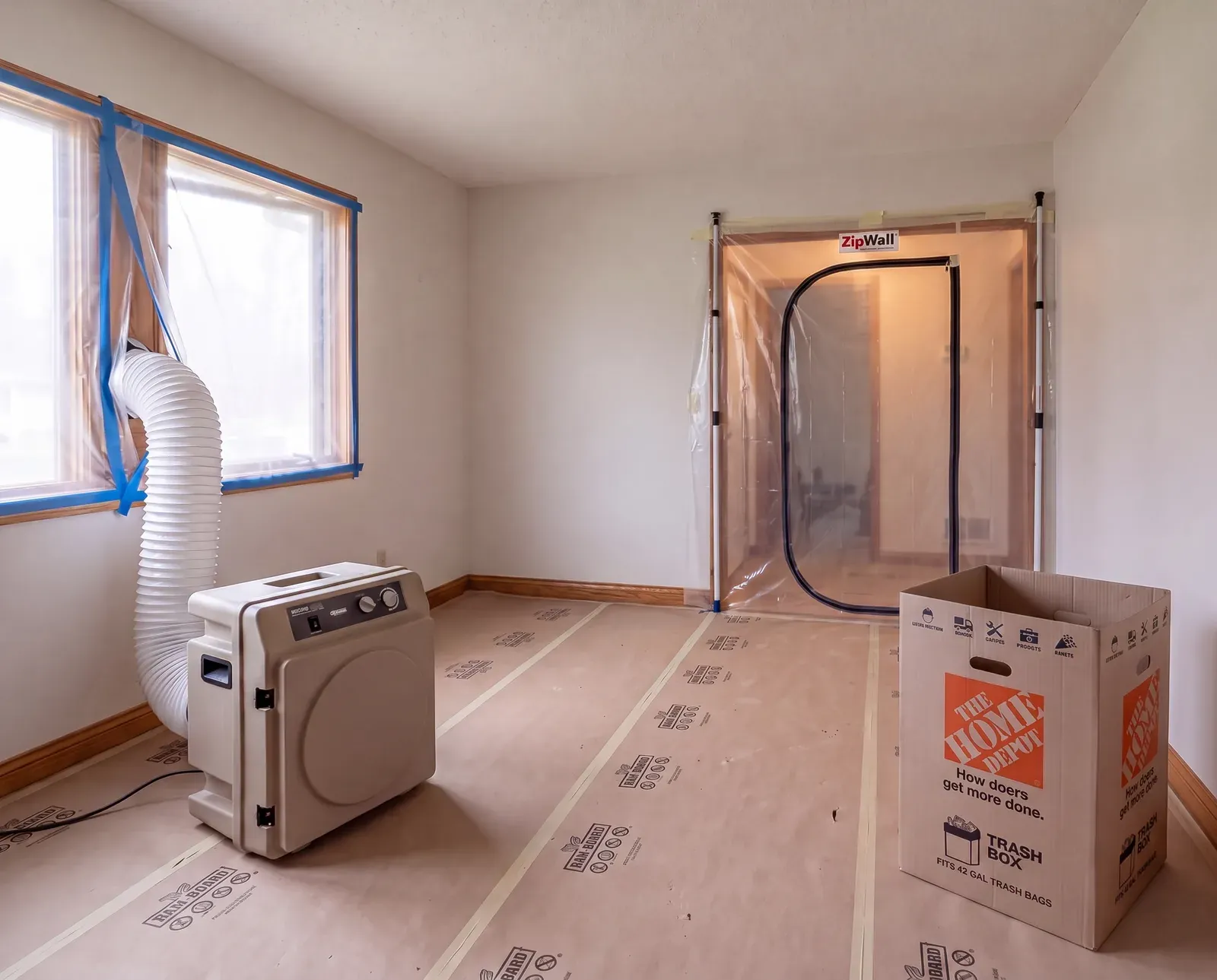
For everyday air quality, a standalone HEPA purifier sized to the room, with a verified clean air delivery rate, captures what the HVAC filter misses. During a remodel the critical application is inside the work zone: HEPA-filtered air scrubbers create negative pressure in the construction area so fine dust can't migrate into the rest of the home. The fix: containment that prevents contamination from leaving the work zone, part of the standard protocol rather than cleanup after the fact.
Humidity control: the mold and dust mite variable
Austin's humidity creates biological air quality threats that filtration alone doesn't address.
Dust mites thrive above 50% relative humidity; mold growth on building materials accelerates above 60%. Austin's climate makes indoor humidity a year-round consideration. The fix combines mechanical dehumidification, mold-resistant substrates in wet areas, and properly sized exhaust ventilation; filtration removes what high humidity produces, but controlling humidity prevents the conditions in the first place.
Of the four, source control is the one that compounds. A filter can be upgraded next year and a dehumidifier added next summer, but the materials sealed into the walls during a remodel off-gas on their own schedule for the life of the renovation.

Why is remodeling the highest-risk moment for air quality?
Because two things happen simultaneously during a remodel that don't happen at any other time in a home's life: existing materials are disturbed, and new materials are introduced. Both create air quality events, and neither is addressed by standard construction practice.
Whether these events stay contained or spread through the home comes down to one decision made before demo begins: work zone isolation.
The green bar is the containment barrier: sealed sheeting plus a HEPA air scrubber holding the work zone at negative pressure.
Containment is also the cheapest of the air quality levers: a day of setup at the start of the project, against weeks of fine dust settling through a home that wasn't protected. It's the clearest single question to ask any contractor you're vetting, and it pairs naturally with the material conversation that follows.
Air quality during a remodel is a job site decision
HEPA containment from day one of demo, and material specs reviewed before construction begins. Tell us about your project.
Why Austin homes face higher stakes than most
In climates where windows stay open for most of the year, homes benefit from natural air infiltration that continuously dilutes indoor pollutants. Austin is not one of those climates. From May through October, most homes stay sealed with HVAC running, which means the air inside is the same air cycling through the same system, with no meaningful fresh air exchange unless one is mechanically provided. That closed-loop condition gives every indoor pollutant source more weight than it carries in more temperate markets:
A remodel is the clearest opportunity to address these conditions at the building-system level: mold-resistant substrates in wet areas, material selection that minimizes off-gassing at the source, and ventilation design that doesn't rely on leaving windows open.

What Enso does differently during a remodel
Air quality during a remodel isn't a feature or an upgrade. It's a job site management decision, and most contractors make it implicitly, by doing nothing. Three practices shape an Enso project.
We contain it
Sealed barriers and HEPA air scrubbers are running before demolition begins, to keep fine dust, VOCs, and disturbed legacy materials out of the living space.
We specify it
Materials are chosen category by category during the design phase: low-VOC paints and finishes, formaldehyde-free cabinetry options, and insulation, with the options and prices in front of you and test data whenever you ask.
We ventilate it
Exhaust ventilation is right-sized and ducted to the outside, and ERVs are specified during design for clients who want them, all before construction.
On older Austin homes, ask about legacy materials during design: testing pre-1980 construction before demo makes them a scoped line item rather than a mid-project discovery. All of it lives in the design documents before a wall opens, which is what makes it enforceable on site.
The first 90 days after your remodel
Even with low-VOC materials and proper containment during construction, new installations off-gas most heavily in the first weeks after completion. A simple ventilation protocol for this period keeps that process moving.
- 1.
Days 1–7: maximum ventilation if weather allows. Open windows on opposite sides of the home for cross-ventilation several hours a day; Austin mornings before 9am are more practical than they sound.
- 2.
Weeks 2–4: continue active ventilation where possible, and run bath and kitchen exhaust fans longer than usual after cooking and bathing to expel moisture and combustion byproducts.
- 3.
Months 1–3: a standalone HEPA purifier with activated carbon in the primary living spaces manages residual off-gassing. The carbon handles VOCs and odors; a HEPA-only unit doesn't address gas-phase pollutants.
- 4.
Ongoing: if air quality is a long-term priority, an ERV is the most meaningful mechanical upgrade for an Austin home. Continuous fresh air exchange without the energy penalty of exhausting conditioned air.
The ERV point deserves the emphasis. Because Austin homes stay closed for so much of the year, an ERV provides fresh air access the climate otherwise makes impractical, and it's especially valuable in homes built after 2000, where tighter construction has eliminated the incidental infiltration older homes get through gaps and imperfect insulation. It's a conversation worth having during design, when the ductwork is open anyway; the cost calculator gives you a baseline range, and a consultation settles whether it belongs in your scope.
Leftover questions
The system-level answers are above. These are the specifics homeowners ask once they start planning.
Most materials off-gas most heavily in the first two to four weeks after installation. Flooring adhesives, conventional paints, and cabinet finishes can continue at lower levels for several months. Choosing low-VOC or zero-VOC materials during the design phase significantly shortens this window, and a ventilation protocol for the first 30 to 90 days, combined with a HEPA and activated carbon purifier in the main living spaces, accelerates the clearing process considerably.
Air quality starts with what you build with
Material specifications, HEPA containment, and ventilation design are all decided before construction begins. You'll leave with real next steps, whether or not we build together.